Things to Do
Florida's springs, the best cheap day out from Orlando
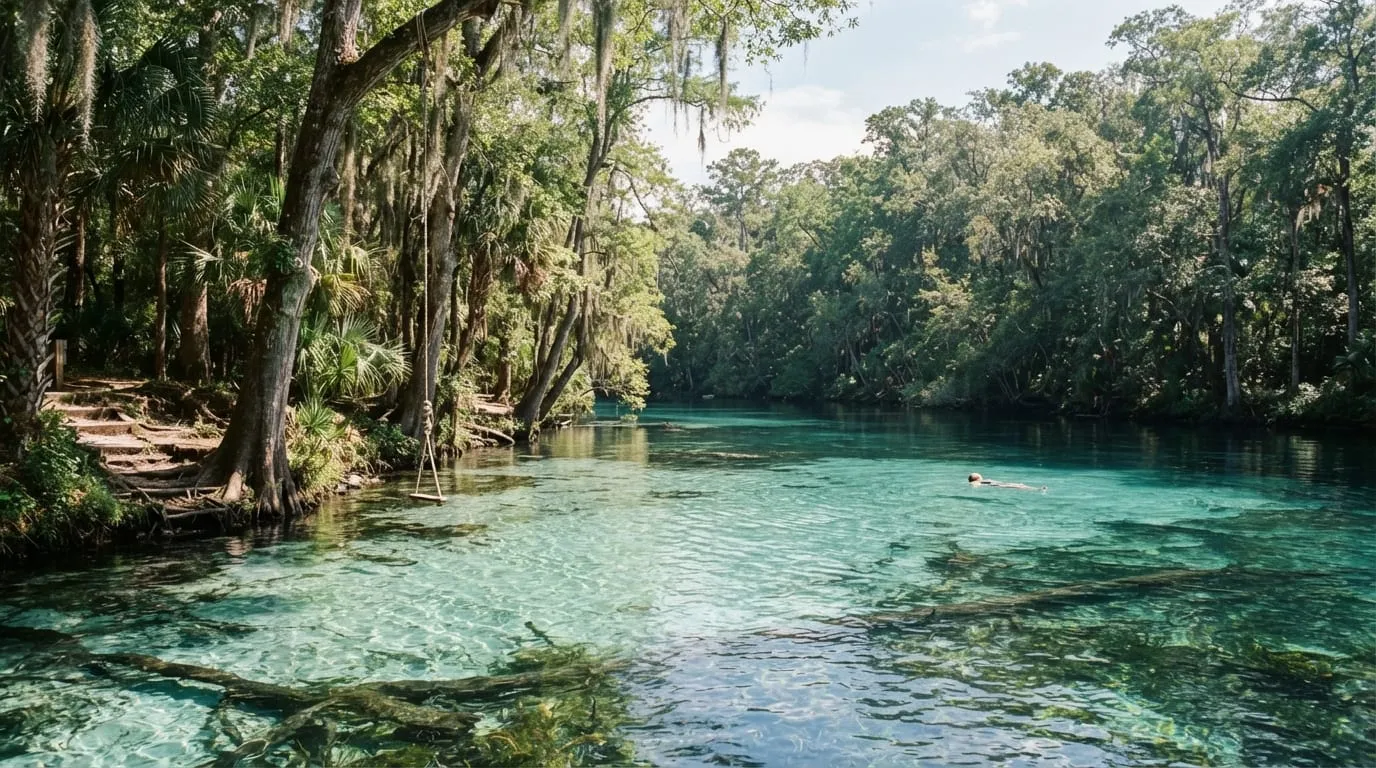
A Florida spring stays around 22°C/72°F all year, costs a few dollars to enter, and is the best-value day off from theme park prices. Here is which one to pick, and why you need to arrive early.
A Florida spring is the best-value day off from theme park pricing that exists within reach of Orlando. Entry runs a few dollars a person at a state park gate, the water is startlingly clear, and it stays close to 22°C (72°F) every single day of the year — no ticket tiers, no upgrade pricing, no reservation window that opens sixty days out.
What a spring actually is, and why the water never changes
Florida sits on limestone riddled with underground aquifers, and a spring is simply where that groundwater surfaces. Because it comes from deep underground rather than from rain running off the surface, it holds a nearly constant temperature year-round — around 22°C (72°F) — regardless of whether the air above is 35°C (95°F) in July or 8°C (46°F) on a rare cold snap in January. That is the whole appeal in one fact: the water feels refreshingly cool in summer and comparatively warm in winter, which is exactly why manatees use the same springs as a winter refuge, covered below.
The springs within reach of Orlando
| Spring | Distance | Drive time | Best for |
|---|---|---|---|
| Wekiwa Springs | ~34 km / 21 mi | 30–40 min | Closest option, tubing, kayaking, an easy half-day |
| Blue Spring | ~55 km / 34 mi | 45–55 min | Manatees (Nov–Mar), swimming outside manatee season |
| Silver Springs | ~135 km / 84 mi | 80–95 min | Glass-bottom boat tours, wildlife, a fuller day out |
| Rainbow Springs | ~140 km / 87 mi | 90–100 min | Clearest water, tubing, the least crowded of the four |
Wekiwa Springs works best as a half-day trip or a quiet weekday add-on to a park-heavy week. Blue Spring, Silver Springs and Rainbow Springs are worth building a full day around once you account for the drive.
Manatee season, and where to see them
From mid-November through March, coastal and river water along Florida’s Atlantic and Gulf coasts regularly drops below about 20°C (68°F), and manatees — which cannot tolerate sustained cold water — move into spring-fed rivers and basins that hold a steady, warmer temperature. Blue Spring is the best-known manatee refuge within range of Orlando, and on a cold morning in January it is realistic to see dozens of manatees gathered in the spring run itself. Swimming is closed off in the manatee zone during the season, but boardwalk viewing areas run alongside it, and this is one of the few genuinely free, unscripted wildlife encounters within a 90-minute drive of the parks.
The capacity problem nobody mentions until you are turned away
Popular springs are not just busy on weekends — they physically stop letting cars in. State parks cap the number of vehicles allowed inside at any one time, and on a weekend, holiday or a hot summer Saturday, a popular spring can hit that cap and start turning visitors away by mid-morning, sometimes before 10am. There is no waitlist and no paid line-skip; once the gate closes for the day, it stays closed until enough cars leave.
If you take one piece of advice from this guide, arrive at or before opening. It is the only reliable way in on a weekend.
Weekday mornings are dramatically easier, and a spring visited on a Tuesday at 9am bears almost no resemblance, crowd-wise, to the same spring on a Saturday at noon.
What to bring
Water shoes matter more than they sound like they should — spring beds are often rock, shell or slightly uneven sand, not soft beach sand. Bring cash as well as a card, since some state park gates and concession stands are cash-only or have unreliable card readers. Snorkel gear is worth packing if you have it; several springs have excellent underwater visibility even without renting equipment on-site. Glass containers are banned at most Florida spring parks, and food and drink options inside the gate are often limited, so pack a cooler if the park allows it.
Entry fees and what a day actually costs
Most Florida state park springs charge a per-vehicle entry fee of roughly $6 to $8, sometimes a per-person rate instead at busier parks, payable at a gate booth or a self-service station. Tubing and kayak rentals where available typically run $20 to $45 per person for a half-day, and a locker or a shaded picnic table is often free or a couple of dollars. For a family of four bringing their own food and skipping the rentals, a full day at a Florida spring can realistically come in under $40 total — a fraction of a single theme park ticket.
Why this needs a car
None of the springs within a realistic day trip of Orlando are reachable by public transit, and rideshare pickup in these areas ranges from slow to nonexistent, especially for the return trip from a rural park entrance. A rental car is effectively required, and it is worth booking one for any day that includes a spring even if the rest of the trip is spent entirely on foot or on resort transport.
Our take
A Florida spring is the cheapest genuinely good day Orlando has to offer, and the only real cost is arriving early enough to get in. Pair it with a picnic instead of an on-site meal, treat the drive as part of the plan rather than an inconvenience, and it beats almost anything else on a per-dollar basis.
If the budget for the trip also stretches to an evening out, our guide to Orlando’s dinner shows sits at the opposite end of the spectrum — paid, indoor, and built around a schedule rather than a sunrise.
Frequently asked questions
How far are Florida's springs from Orlando?
The closest, Wekiwa Springs, is about 30 to 40 minutes from most Orlando resort areas. Blue Spring runs 45 to 55 minutes, Silver Springs about 80 to 95 minutes, and Rainbow Springs is the furthest at roughly 90 to 100 minutes depending on traffic. All four make a realistic single-day trip by car.
Why does the water in Florida springs stay warm in winter and cool in summer?
Spring water comes from underground aquifers that hold a nearly constant temperature year-round, close to 22°C (72°F), regardless of the air temperature above ground. That is why the water feels cold on a hot August day and comparatively warm on a cool December morning.
When is the best time to see manatees at Florida springs?
Mid-November through March, when coastal and river water drops below about 20°C (68°F) and manatees move into spring-fed water that holds a steady, warmer temperature. Blue Spring is the best-known manatee refuge within reach of Orlando during these months.
Do Florida springs close if they get too crowded?
Yes. State parks with springs cap the number of vehicles allowed inside, and popular springs routinely reach capacity and turn cars away by mid-morning on weekends and holidays, sometimes before 10am. Arriving at or near opening time is the only reliable way in on a busy day.
Can I visit a Florida spring without a car?
Not realistically. None of the springs within range of Orlando are served by public transit, and rideshare coverage in those areas is unreliable at best. A rental car or a tour that includes transport is effectively required.
Keep planning
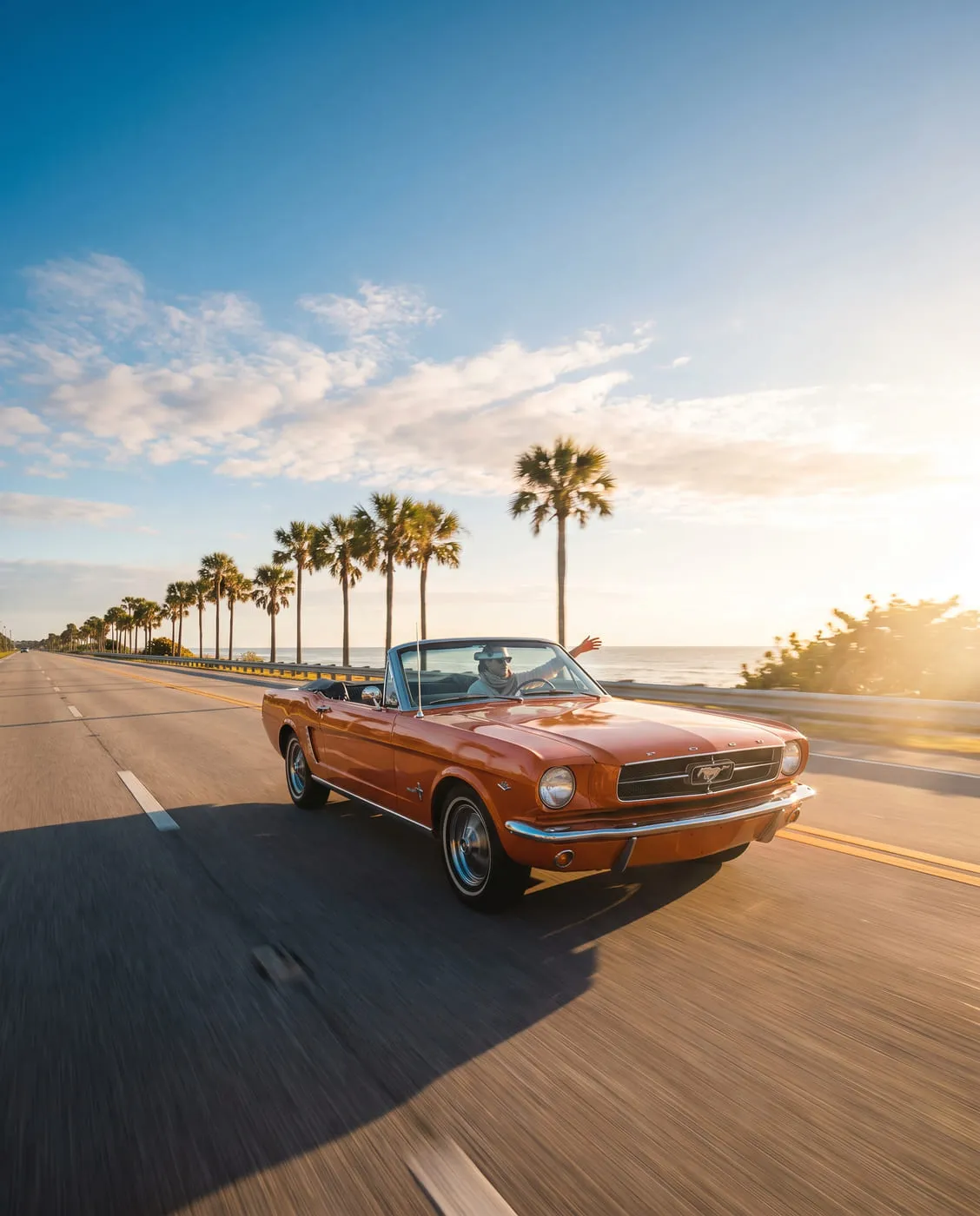
The real cost of renting a car in Orlando
The number on the booking site is the smallest number you will pay. Here is what a rental car in Orlando really costs once insurance, tolls, fuel and parking are added.
Read the guide
Is Kennedy Space Center worth a full day?
It is the best non-park day in central Florida and the one most itineraries leave out. Here is what it actually costs, how far it is, and whether a full day is worth the drive.
Read the guide
Orlando dinner shows, what the evening actually costs and takes
Dinner shows are the category Orlando visitors either love or resent, and the difference usually comes down to expectations. Here is what the evening really costs, takes and delivers.
Read the guide